

Business Trends
Currently India constitutes only 8% of organized retail and remaining 92% is left unorganized, which may grow much faster than traditional retail. It is expected to gain a higher share in the growing pie of the retail market in India. Various estimates put the share of organized retail as 20% by 2020.
- By 2020, the Indian retail market is projected to reach USD 1.2 tn.
- India’s e-commerce market is also set to grow at a 30% compound annual growth rate for gross merchandise value to be worth USD 200 bn by 2026 and market penetration will increase to 12% from existing 2%.
- India is largely an unorganized retail market, contributing 92% to the total retail sector in India. Currently, the organized retail market is valued at USD 60 bn, and the unorganized market holds the rest.
- The organized retail market is projected to increase to 13% by 2020, with the unorganized market reducing to 87%. Organized retail therefore, has the potential to reach approx. USD 140-160 bn.
Food & Beverage
India is well-known for its food and beverages service industry. It is one among the most vibrant industries which demonstrated unprecedented growth in the recent past. The industries is continues to expand rapidly. This growth can be attributed on account of changing demographics, growing disposable income, urbanization and growth of retail industry.
We conduct a detailed case analysis, proposing the result orienting market entry strategy consulting models based on the market concept delved findings to our valued clients.

Market Opportunity Estimations:
- We understand the complete operational format of the brand
- General marketing characteristics of the business
- Gain familiarity with prior expansion strategies, if any.
- Workability Analysis: We aid our clients to identify business opportunities for both local and international markets evaluating future prospects for services and products. We also endeavour studies testing the product concept or an idea proceeding to its market launch.
- Business Plan Preparation: Our custom-made business plan engage in preparing detailed Performa and other financial projections inclusive of five year cash flow plan, moreover recommending operational, legal and marketing aspects of the business for short and long term goals.
- Financial Module and Review: Our financial module is created to cater a future overview of the business building a hypothetical financial representation under diverse situations. This simple statistical model represents the performance of the business/project/or any other form of financial investments in business.
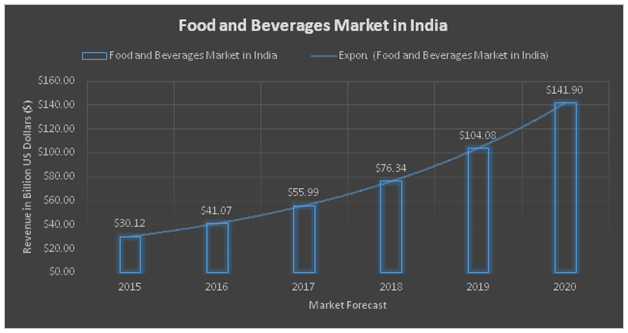
The food and beverage market was estimated at US$30.12 billion in 2015 and is expected to reach US$142 billion by 2020, with a compounded annual growth rate (CAGR) of 36.34%. The sector is dominated mainly by traditional operators. The brands and restaurant chains of both Indian origin and multinationals have not optimally penetrated the market so far. The food and beverage sector has evolved over the past decade, giving rise to exciting new concepts in food and beverage offerings and new and innovative service elements.
The food and beverages service market is dominated by unorganized segment and although it will decline significantly over the next 4-5 years, and it is likely to remain more than 60% of the market. Quick Service Restaurants (QSR) and casual dining are the two most popular formats that form 45% and 32% of the overall market respectively. The maximum growth being witnessed is still in the standalone restaurant space where local taste along with uniqueness of concept is the key deciding factor.
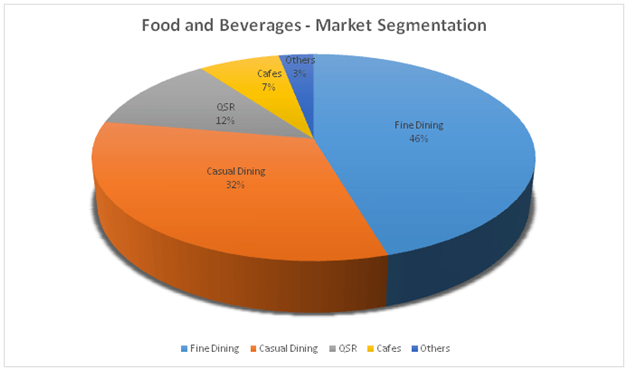
There is a wide acceptance for the segments like fine dining, casual dining, quick service restaurants, cafes in the recent past.
With investments expected both for expansion and by new entrants, there will also be a rapid development of the entire value chain in India. With emphasis on ‘Make in India’, it is expected that the major international players for kitchen equipment and processed food will set-up units in India to supply to this sector. In addition, there will be several domestic entrepreneurs who will make investments to increase quality levels and standards to meet the requirements of the sector.
Health & wellness
The fitness industry in India is controlled at a variation point, with the high market division, amazing market potential and end-to-end overall growth. Several new business ideas are coming-up to disrupt this industry.The fitness sector in India has travelled a long journey from local ‘akhadas’ to wrestling now being a part of the international Olympics, with India actively taking part in it and winning medals for the country.

Bodybuilding and powerlifting championships are other such examples. Social occasions made people travel huge distances and perform for hours together, which in turn required exceptionally higher levels of stamina and strength. Today fitness industry in India is going towards health, well-being, good looks and confidence. Resistance training, aerobics, Zumba, aerial yoga, Pilates, MMA, kickboxing etc. have become the fitness trends over a few years in India.
The Indian fitness industry is going through a revolution spiked by the increasing number of cases of obesity and diabetes. If you look around, you will find that weight loss advertisements are everywhere. This is one of the reasons why health clubs and gym memberships are increasing. Spending on gym was earlier seen as a luxury, but now it is a way of life. Also in tier 2, tier 3 cities, people are increasingly going for wellness and fitness. Today’s generation wants to look and feel good at any cost and this is further fueling the overall growth of the fitness resources and services.
Big fitness chains and gyms are already expanding their product and services to tap into the market in each and every way possible and reach out to potential customers. Given the various and messy Indian market, franchising has caught on really fast.
Modern fitness concepts have entered India. The whole industry and the government should come together and catapult the industry to a stage where it can flourish. The fitness industry has great potential in a country like India. It is a sunrise sector, poised to grow by 22-30 per cent year on year.
Education
India holds an important place in the global education industry. The country has more than 1.5 million schools with over 260 million students enrolled and about 751 universities and 35,539 colleges. India has one of the largest higher education systems in the world. Around 35.7 million students were enrolled in higher education in India during 2016-17. However, there is still a lot of potential for further development in the education system.
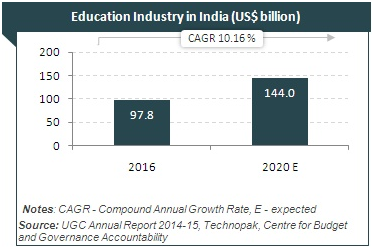
India has become the second largest market for e-learning after the US. The sector is currently pegged at US$ 2 billion and is expected to reach US$ 5.7 billion by 2020. The distance education market in India is expected to grow at a Compound Annual Growth Rate (CAGR) of around 11 per cent# during 2016-2020. Moreover, the aim of the government to raise its current gross enrolment ratio to 30 per cent by 2020 will also boost the growth of the distance education in India. The total amount of Foreign Direct Investments (FDI) inflow into the education sector in India stood at US$ 1.67 billion from April 2000 to December 2017, according to data released by Department of Industrial Policy and Promotion (DIPP).
Education sector has seen a host of reforms and improved financial outlays in recent years that could possibly transform the country into a knowledge haven. With human resource increasingly gaining significance in the overall development of the country, development of education infrastructure is expected to remain the key focus in the current decade. In this scenario, infrastructure investment in the education sector is likely to see a considerable increase in the current decade
Moreover, availability of English speaking tech-educated talent, democratic governance and a strong legal and intellectual property protection framework are enablers for world class product development.
Food Processing Companies
Food processing companies bridge the gap between agriculture and consumption by transforming raw ingredients into value-added products. These businesses utilize advanced thermal, chemical, and mechanical techniques to enhance shelf life, improve safety, and ensure nutritional consistency. In a globalized market, food processors focus on scaling production through automation and adhering to international safety standards like HACCP. ExpanGlobal assists these firms in entering emerging markets by identifying local consumer trends, navigating complex food safety regulations, and establishing reliable supply chains. This ensures that processed goods maintain quality while meeting the specific dietary preferences of local demographics.


Restaurant Chain
Successful restaurant chains thrive on consistency, brand identity, and operational efficiency across multiple locations. Expanding a chain internationally requires a delicate balance between maintaining core brand values and adapting to local tastes—a process known as localization. From Quick Service Restaurants (QSR) to fine dining, these businesses rely on robust franchise models to scale rapidly. ExpanGlobal helps restaurant brands identify prime real estate, source reliable local vendors, and find the right master franchise partners. By analyzing market competition and dining habits, they ensure that a brand’s menu and service style resonate with the target audience.
Drinks & Juices Companies
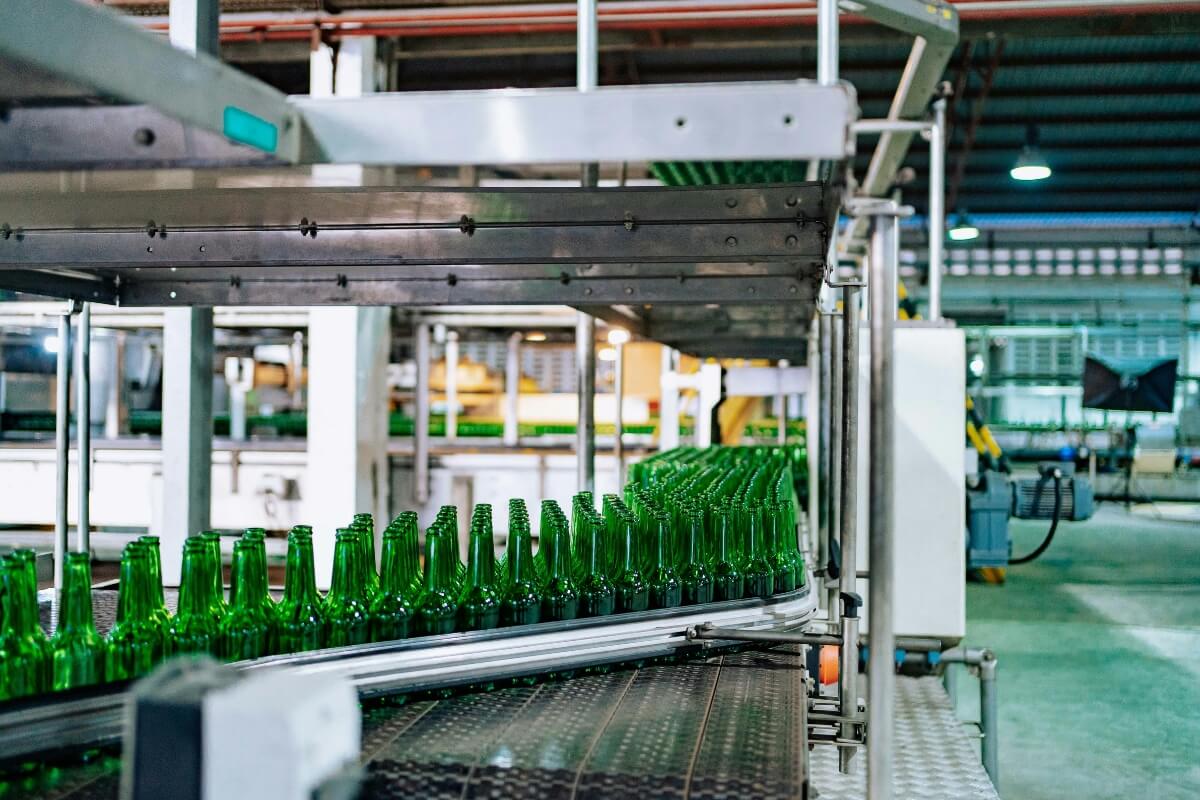
The beverage industry is characterized by high competition and a rapid shift toward health-conscious consumption. Companies in this sector produce everything from carbonated soft drinks to cold-pressed organic juices and functional beverages. Global expansion for these firms often involves setting up local bottling plants or partnering with regional distributors to manage high logistics costs. ExpanGlobal supports drinks and juices brands by conducting market feasibility studies and identifying distribution channels that maximize shelf presence. They also provide insights into local packaging regulations and sugar-tax policies, helping brands position their products effectively against established local players.

Garment & Textile Companies
Garment and textile companies are at the heart of the global fashion and industrial fabric sectors. These businesses manage complex lifecycles involving fiber production, fabric weaving, and garment manufacturing. With the rise of fast fashion and sustainable textiles, companies are seeking new manufacturing hubs and retail markets. ExpanGlobal assists textile firms in establishing a footprint in emerging markets by navigating trade agreements and labor regulations. They help brands identify strategic manufacturing partners or retail franchise opportunities, ensuring that seasonal collections align with local fashion trends, climate requirements, and price sensitivities of the target consumer base.
Cosmetic & Personal Care Companies
The beauty and personal care industry is driven by innovation, branding, and strict regulatory compliance regarding ingredients and safety. Companies in this space range from mass-market hygiene products to luxury skincare and herbal cosmetics. Entering a new market requires understanding local skin types, cultural beauty standards, and environmental factors. ExpanGlobal aids cosmetic brands by facilitating product registration with local health authorities and developing market entry strategies that emphasize brand storytelling. They connect brands with authorized distributors and retail chains, ensuring products reach the right demographics while maintaining a premium or value-driven brand image.


Packaging Companies
Garment and textile companies are at the heart of the global fashion and industrial fabric sectors. These businesses manage complex lifecycles involving fiber production, fabric weaving, and garment manufacturing. With the rise of fast fashion and sustainable textiles, companies are seeking new manufacturing hubs and retail markets. ExpanGlobal assists textile firms in establishing a footprint in emerging markets by navigating trade agreements and labor regulations. They help brands identify strategic manufacturing partners or retail franchise opportunities, ensuring that seasonal collections align with local fashion trends, climate requirements, and price sensitivities of the target consumer base.
Furniture Manufacturers
Furniture manufacturing combines craftsmanship with mass production to serve residential, commercial, and hospitality sectors. Companies must manage logistics carefully due to the bulkiness of products and the need for assembly-ready designs. Expansion into emerging markets often focuses on the growing middle class and the booming real estate sector. ExpanGlobal assists furniture brands in identifying local manufacturing partners to reduce shipping costs or setting up exclusive brand showrooms. They provide market insights into popular design styles—from traditional wood to modern modular furniture—and help establish franchise networks that provide both sales and after-sales assembly services.


Building Material Companies
The building materials industry supplies the foundation for infrastructure and real estate development, including cement, steel, tiles, and glass. These companies are highly sensitive to local construction cycles and government infrastructure spending. Expanding internationally allows these firms to tap into high-growth urban development projects. ExpanGlobal helps building material companies connect with major developers, architects, and government contractors. They provide guidance on local quality certifications and standards, ensuring that products meet architectural requirements. By facilitating joint ventures or distribution networks, they help these brands become key players in the local construction supply chain.
Plastic Product Manufacturers
Plastic product manufacturers produce a vast array of goods, ranging from industrial components and automotive parts to household items and medical devices. The industry is currently evolving toward high-performance polymers and recycled materials to meet environmental regulations. Global expansion for these firms involves setting up production units near end-user industries to minimize transport costs. ExpanGlobal supports plastic manufacturers by identifying specific industry demands in emerging markets, such as the need for specialized packaging or irrigation components. They provide strategic advice on navigating environmental policies and finding local partners for large-scale manufacturing and distribution.

Chemical Manufacturers
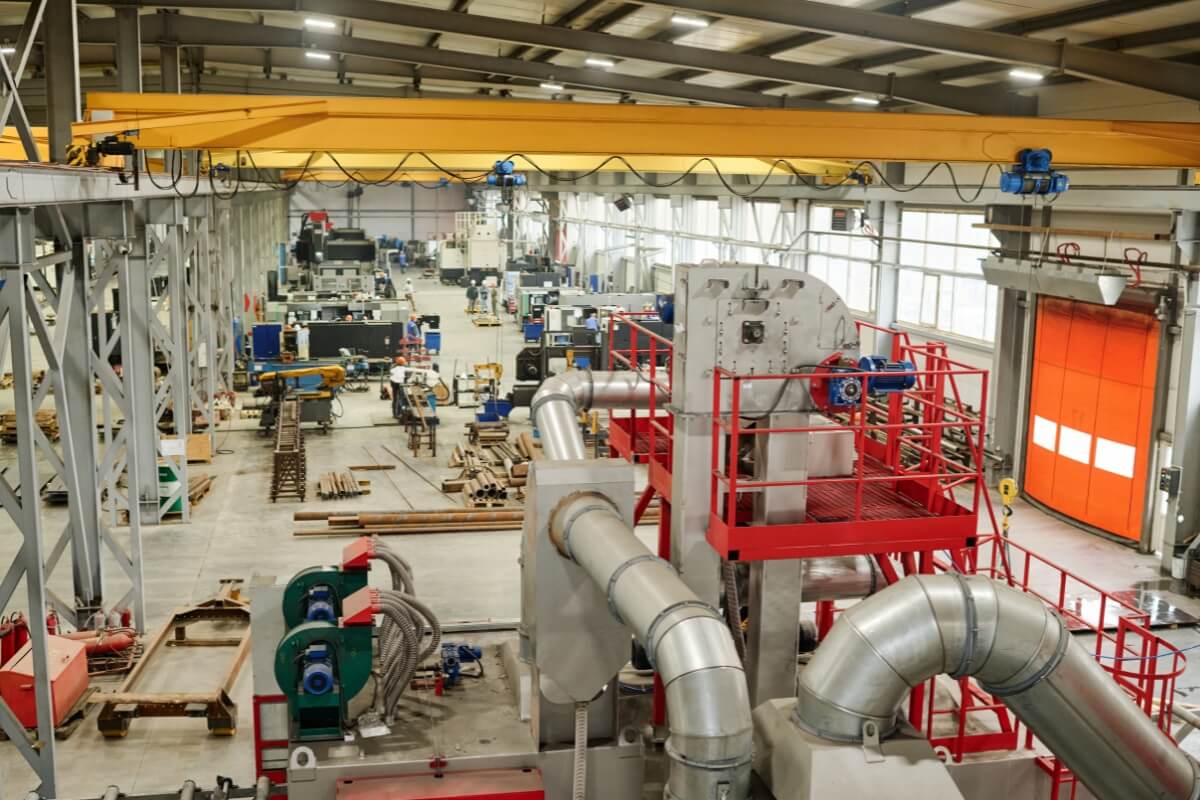
Chemical manufacturers produce the raw materials essential for various sectors, including agriculture, pharmaceuticals, and manufacturing. This industry is strictly regulated due to safety and environmental concerns. Expanding into new regions requires deep knowledge of local chemical safety laws and specialized logistics for hazardous materials. ExpanGlobal helps chemical firms navigate the regulatory landscape and obtain necessary permits for storage and distribution. They assist in identifying industrial buyers and strategic partners for local formulation and blending. Their market research ensures that chemical companies target the right sectors where demand for specific industrial chemicals is growing.
Pharmaceutical Companies
The pharmaceutical industry is focused on the research, development, and distribution of life-saving medications and healthcare products. This sector is characterized by rigorous clinical trials, intellectual property protections, and stringent government oversight. Global expansion often involves localizing production to lower costs or entering into licensing agreements with regional firms. ExpanGlobal aids pharmaceutical companies by guiding them through the complex drug approval processes and regulatory filings. They help identify reliable local distributors and hospital networks, ensuring that brands can successfully launch their products in markets with high healthcare demand while remaining fully compliant.

Agriculture Product Companies
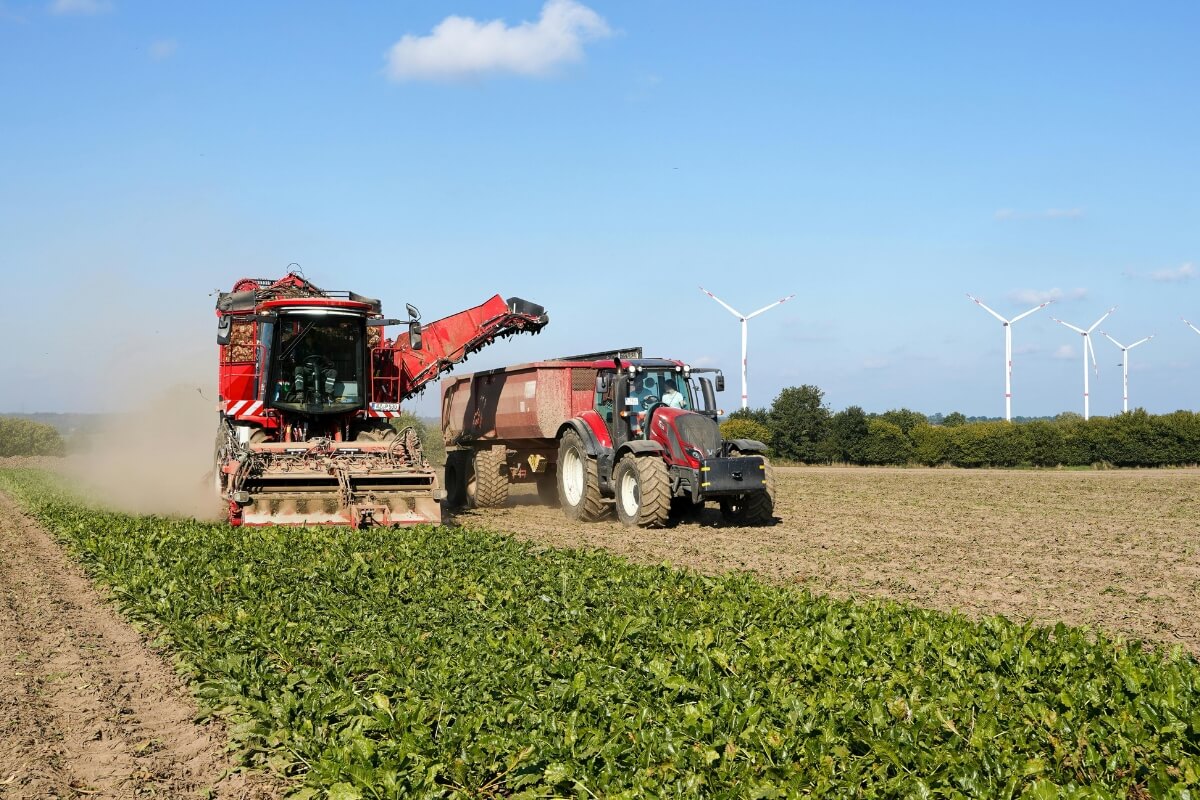
Agriculture product companies provide the seeds, fertilizers, pesticides, and equipment necessary for modern farming. These firms play a critical role in global food security and are increasingly focusing on sustainable and precision farming technologies. Expanding into new territories requires understanding local soil conditions, crop cycles, and farmer purchasing behavior. ExpanGlobal assists these companies by conducting ground-level market research and establishing distribution networks in rural and semi-urban areas. They help brands introduce innovative agricultural solutions to local farming communities, facilitating partnerships with agricultural cooperatives and government agencies to drive large-scale adoption and brand loyalty.
Machinery Manufacturers
Machinery manufacturers produce the industrial equipment used in factories, construction sites, and power plants. These products range from heavy earthmovers to precision CNC machines. The success of machinery brands depends on technical superiority, after-sales support, and financing options for buyers. ExpanGlobal helps machinery firms enter emerging markets by identifying industrial hubs with high automation needs. They facilitate the setup of service centers and spare parts warehouses, which are crucial for customer retention. By connecting manufacturers with local industrial distributors, they ensure a steady pipeline of projects and a strong regional presence.

Electronics Manufacturers
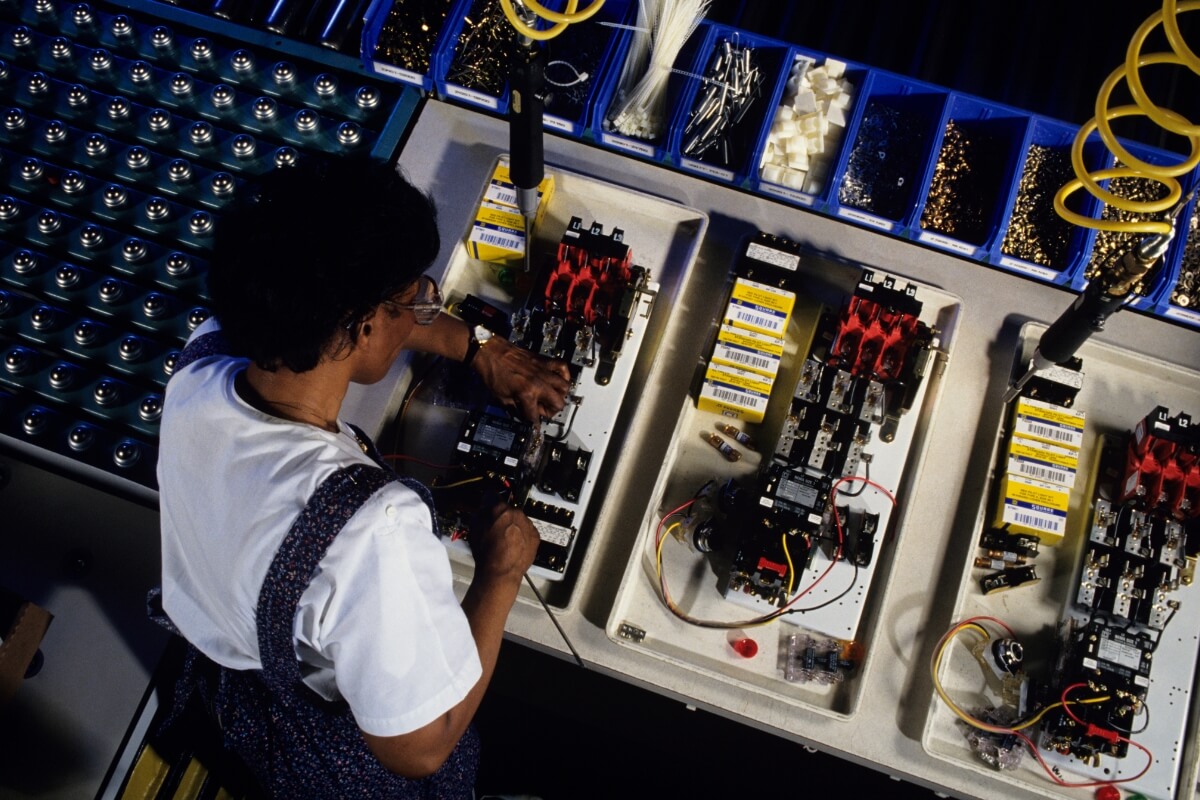
Electronics manufacturing is a fast-paced sector encompassing consumer gadgets, home appliances, and industrial components. Companies must constantly innovate to keep up with technological shifts and consumer demands. Expanding globally often involves setting up “assembly-only” units to benefit from local tax incentives. ExpanGlobal assists electronics brands in navigating the “Make in India” type initiatives and electronics manufacturing clusters. They help source local components and establish retail franchise networks or e-commerce partnerships. Their expertise ensures that electronics companies can rapidly scale their presence while managing complex supply chains and local warranty service requirements.
Automotive Parts Companies
The automotive parts industry supplies the thousands of components required for vehicle assembly and the aftermarket. This sector is currently shifting toward electric vehicle (EV) components and smart technology integration. Global expansion is typically driven by the need to be close to major Original Equipment Manufacturers (OEMs). ExpanGlobal helps auto-part manufacturers identify strategic locations near automotive hubs and find local joint-venture partners. They provide insights into the spare parts retail market and help brands establish a presence in the organized aftermarket, ensuring their components are available to both car manufacturers and independent workshops.


Gift & Promotional Product Companies
The gift and promotional product industry thrives on creativity, customization, and corporate branding. Companies in this sector provide everything from luxury corporate gifts to high-volume promotional merchandise for events. Expanding into new markets requires understanding local gifting cultures and corporate procurement cycles. ExpanGlobal helps these brands identify corporate clients and large-scale event organizers. They provide market insights into popular product categories and help establish local printing or customization facilities. This allows brands to offer faster turnaround times and competitive pricing, making them the preferred choice for local businesses looking to enhance their brand visibility.
Kitchenware Manufacturers
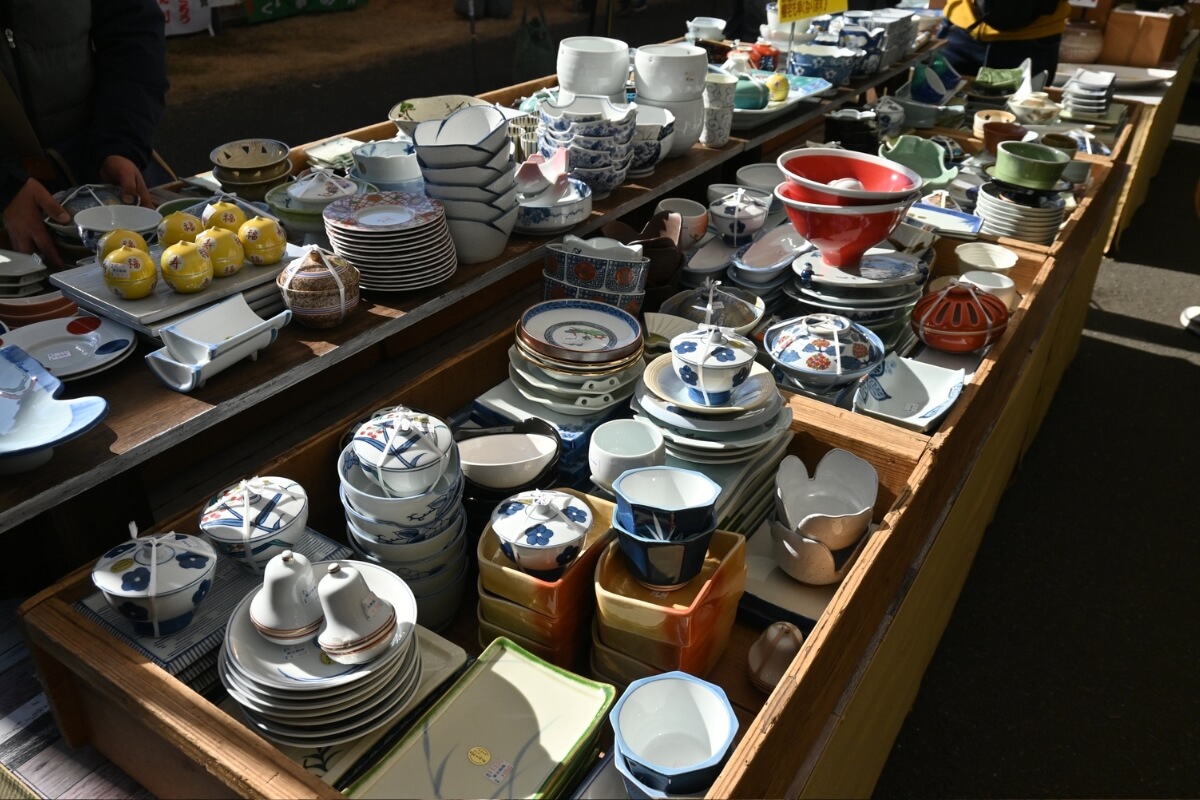
Kitchenware manufacturers produce a wide range of products, from professional-grade cookware to everyday household utensils and small appliances. This industry is driven by changing lifestyle trends, such as the rise of modular kitchens and healthy cooking habits. Expanding internationally requires adapting product designs to local culinary practices and stove types (e.g., gas vs. induction). ExpanGlobal assists kitchenware brands in finding retail partners and setting up exclusive brand outlets. They provide research on consumer preferences for materials like stainless steel, ceramic, or non-stick, helping brands tailor their product portfolios to satisfy the specific needs of local homemakers and chefs.

Home Cleaning Product Companies
Home cleaning product companies produce detergents, disinfectants, and specialized cleaning tools. This sector has seen a massive surge in demand for hygiene-focused and eco-friendly products. Global expansion involves competing with both multinational giants and established local brands. ExpanGlobal helps cleaning brands navigate the competitive retail landscape by identifying niche market opportunities, such as organic or pet-safe cleaning solutions. They facilitate distribution through supermarkets, local kirana stores, and online platforms. By advising on local packaging sizes and pricing strategies, they ensure that home cleaning brands can capture significant market share in price-sensitive emerging economies.
Health & Wellness Brands
Health and wellness brands focus on holistic well-being, offering products like vitamins, dietary supplements, organic foods, and fitness gear. This industry is rapidly growing as consumers prioritize preventive healthcare. Expanding into new markets requires careful navigation of food supplement regulations and health claims. ExpanGlobal helps wellness brands position themselves as trusted authorities through strategic marketing and local influencer partnerships. They identify the best retail channels, from specialty health stores to pharmacy chains. Their guidance ensures that brands can successfully tap into the growing demand for wellness while adhering to all local health and safety guidelines.